Showing 81-100 of 243 results
November-December 2021 Innovations Newsletter Features Urban Farming Projects
Check out our latest Innovations newsletter that features recently funded urban agriculture projects, open staff positions and a call to farmers interested in serving on Northeast SARE's Administrative Council.
Northeast SARE awards $708,591 in grants to work in partnership with farmers
Northeast SARE's Administrative Council recently awarded 27 Partnership Grant proposals for the 2021 grant cycle, totaling $708,591. These projects are now underway with the goal of working in direct partnerships with farmers to encourage innovative solutions to current sustainability challenges related to production, marketing, and/or farmer and community well-being in Northeast farming and food systems. […]
Graduate students receive Northeast SARE grants to conduct sustainable agriculture research
Twenty-eight students from around the Northeast were recently awarded grants by Northeast SARE to conduct sustainable agriculture research. Graduate students at any accredited Northeast university, college or veterinary school were invited to submit proposals to Northeast SARE's Graduate Student Research Grant Program. The program funds graduate student research focused on sustainable agriculture using either or […]
Farmers Invited to Apply for Sustainable Ag Grants
The Northeast Sustainable Agriculture Research and Education (SARE) Program is inviting farmers and growers to submit proposals to its Farmer Grant Program. Proposals are due online by 5 p.m. on Nov. 16 for projects starting next spring. Funded projects, which are capped at $30,000, will be announced in late February 2022. The call for proposals, […]
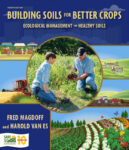
New Edition of "Building Soils for Better Crops" Now Available
The fourth edition of SARE’s most popular book, Building Soils for Better Crops: Ecological Management for Healthy Soils, is now available online and in print. The book covers everything from soil organic matter and nutrient cycles to ecological soil management including sections on cover crops, compost, reduced tillage, addressing fertility issues and more. Building Soils […]
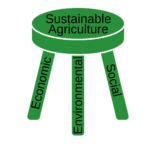
July-August Innovations Newsletter Focuses on Social Sustainability
Visit our latest edition of Innovations to learn more about Northeast SARE, our Grant programs, and stories of funded projects. This edition focused on social sustainability.
Supporting Relationships for Farm Success
It is not uncommon that the barriers to implementing changes on the farm are not related to production or marketing but rather interpersonal or "non-technical" issues like effective communication, decision-making, goal setting and time management. This toolkit was created by Dr. Leslie Forstadt, University of Maine Cooperative Extension, and Abby Sadauckas, Apple Creek Farm, as […]
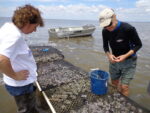
Down by the Bay: Project Supports Safe Oyster Production
Oyster production is a key contributor to the local food economy in New Jersey’s Delaware Bay. The “merroir” of the Bay’s tide flats gives oysters their unique and desired taste. However, recent increases in illnesses caused by raw oyster consumption threaten the Bay’s oyster farming future. The culprit is Vibrio parahaemolyticus (Vp), a bacterium commonly […]
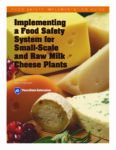
Implementing a Food Safety System for Small-Scale and Raw Milk Cheese Plants
The purpose of this guide is to assist small-scale and raw milk cheesemakers in conducting Hazard Analyses of their processes to ensure they are producing the safest product possible and to meet the requirements of the Food Safety Modernization Act (FSMA). The author, Dr. Kerry E. Kaylegian of the Pennsylvania State University, created this resource […]
Considerations and Recommendations When Establishing Custom Grazing Relationships
This guide and set of recommendations are intended for organic dairy farmers and other livestock graziers interested in starting a custom grazing relationship with a neighboring farmer or landowner. Successful custom grazing can provide or increase grazing acreage for those farmers who need it and can also provide opportunities for smaller, beginning, leased, and diversified […]
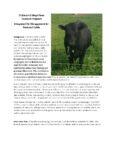
Integrated Fly Management for Pastured Cattle
In grazing systems, flies can not only be a nuisance for cattle but can also cause herd health problems like pink eye, and reduce milk production and weight gain. Matt Steiman, livestock manager at Dickinson College Farm worked with Dr. Jason Smith, entomologist and horticultural specialist at Milton Hershey School to develop this fact sheet […]
Managing Staph aureus on the Organic Dairy
Staphylococcus aureus is a bacterium that causes mastitis in dairy cattle. Staph aureus mastitis is highly contagious and can easily spread among the herd. Organic dairy farmer Katie Webb Clark conducted a Northeast SARE Farmer Grant project to test milking hygiene and preventative management protocols used in the U.S. and New Zealand, trialed Manuka honey […]
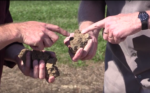
Cornell Soil Health Assessment
The Cornell soil health assessment was created to help farmers develop appropriate management solutions to build healthy soils. Focusing on soil health helps improve productivity, reduces the need for external inputs, and increases a farm's resilience to extreme weather events.
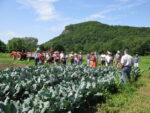
Northeast SARE Now Accepting Preproposals for 2022 Projects
The Northeast Sustainable Agriculture Research and Education (SARE) program is seeking preproposals for three grant programs: Research and Education, Professional Development and Research for Novel Approaches. Grants are aimed at improving sustainable agriculture and local food systems throughout the Northeast and Mid-Atlantic. Preproposals, which capture the preliminary project concept, are required for each grant program […]
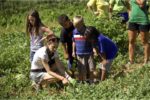
Vermont Food Education Every Day
Includes guides for farmers and food service personnel working to increase local food in schools.
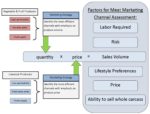
Livestock Marketing Channel Assessment Tool
This tool provides livestock producers with a way to identify the most profitable marketing channels.
Northeast Agritourism Collaboration
This Northeast Agritourism Collaboration website, hosted by the University of Vermont, supports farmers and ranchers interested in entering the agritourism business by sharing best practices and resources available in the Northeast.
Agricultural Conservation Leasing Guide
This bulletin, authored by Sarah Everhart of the University of Maryland Francis K. Carey School of Law, provides guidance to farmers, landowners and agricultural service providers interested in lease agreements to help implement stewardship planning and conservation practices on leased land. The publication describes many popular conservation programs and considerations for how they might be […]
Reversing the Downward Trend
Farmers across the Northeast have reported decreases in consumer participation at farmers' markets and reduced sales. This toolkit was developed as a result of survey research that looked at consumer perceptions of shopping at farmers' markets. The publication provides information on marketing strategies and services aimed to help farmers' market managers and farmers understand what […]
Annual Report Looks Back at 2020 and Looks Up to the Future
Northeast SARE has published its annual report for 2020. The report includes a piece from director Vern Grubinger called, "Looking up – for Sustainability". It highlights funded projects representing each of Northeast SARE's six competitive grant programs, and lists the 111 projects awarded in 2020.