Showing 1-14 of 14 results
Guide to interseeding cover crops into corn systems in the Northeast
Although substantial gains in cover crop acreage have been seen across the northeast, proper establishment of cover crops continues to be challenging for dairy operations which rely heavily on corn silage. Farmers are interested in exploring the concept of solar corridors that integrates row crops with solid-seeded cover crops in broad strips. The broad strips […]
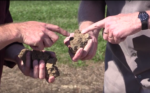
Cornell Soil Health Assessment
The Cornell soil health assessment was created to help farmers develop appropriate management solutions to build healthy soils. Focusing on soil health helps improve productivity, reduces the need for external inputs, and increases a farm's resilience to extreme weather events.
A Practical Guide to No-Till and Cover Crops in the Mid-Atlantic
No-till and cover crops are among the most cost effective tools to reverse soil and carbon loss and improve soil health; the economic, agronomic and environmental benefits of these practices are well known within the farming community. Transitioning from conventional farming to no-till, and incorporating the use of cover crops, requires a higher level of […]
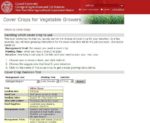
New York Cover Crops Decision Tool
This is an online tool to help you quickly narrow the choices of cover crop for your situation. In a few seconds, you will have growing instructions for the cover crop that will do the job you need. Access the Cover Crops Decision Tool now. It is designed for the soil, climate, cropping practices and […]
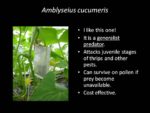
Predatory Mites for Organic Thrips Control in High Tunnel Cucumbers
A presentation of grant-funded research on biological control methods in New York, including cultural practices, plant resistance, grafting, rotations, sprays and beneficials.
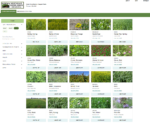
New Online Tool Helps Farmers Make Cover Crop Decisions
The Northeast Cover Crops Council (NECCC) recently released an online tool designed to support farm decision-making around cover crops. The Cover Crop Decision Support Tool is available at no cost at: http://covercrop.tools/. It includes a Cover Crop Explorer that provides in-depth information on more than 35 cover crop species. It also has a Species Selector […]
Northeast Cover Crop Decision Support Tool
The Northeast Cover Crops Council (NECCC) has created an online tool designed to support farm decision-making around cover crops. The tool includes a Cover Crop Explorer that provides in-depth information on more than 35 cover crop species. It also has a Species Selector that assists users in selecting individual cover crops based on plant hardiness […]
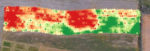
Crediting Cover Crops and Soil Organic Matter in a Variable Rate Nitrogen Fertilizer Prescription
Crop growth depends on available nitrogen (N) in the soil, much of which comes from mineralization of soil organic matter and other organic residues, such as cover crops. The amount of mineralized N available to a crop depends on several biological and environmental factors such as temperature, moisture, soil texture, the total quantity of organic […]
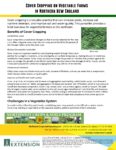
Cover Cropping on Vegetable Farms in Northern New England
This bulletin, authored by Heather Darby and her staff at the University of Vermont Extension Crops and Soils Team, provides basic information on cover crop strategies for vegetable farms based in northern New England. It addresses cover crop benefits and challenges; cover crop selection, seeding option planting dates, termination options; and additional resources. The bulletin […]
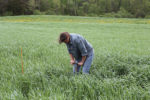
Cornell team digs into cover crops as livestock feed
Cornell University agronomist Quirine Ketterings conducted her Northeast SARE Research and Education project to better understand the incorporation of winter cereal cover crops— triticale, winter rye and wheat—into silage corn rotations. This double crop system enables farmers to provide both corn and cover crops as livestock feed. Because growing cover crops as dairy forages means […]
Beyond Black Plastic
This publication explores sustainable, organic mulches such as cover crops and no-till and reduced tillage systems as alternatives to black plastic mulch for weed control. The booklet includes a discussion of the impact of organic mulches on soil quality and fertility, weed control, yields and waste production, and profitability for small to mid-size vegetable operations.
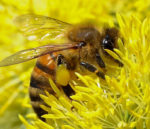
Native bees and flowering cover crops
While managed colonies of European honey bees are most frequently used for crop pollination, wild or native bees commonly provide the same pollination services for ‘free’ without the costs of renting or maintaining honey bee hives.
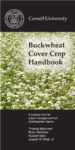
Buckwheat Cover Crop Handbook
Buckwheat has been used to suppress weeds on Northeastern farms for 400 years. This handbook outlines how to use buckwheat as an economical weed-control tool, with recommendations based on extensive grower surveys, original research and on-farm trials.
NOFA Handbooks
A series of eight handbooks for new farmers or established producers seeking to transition to organic or improve their current practices. Print only; order from Chelsea Green.