Showing 161-180 of 243 results

Supporting the development of agritourism in the Northeast
Northeast farmers are increasingly reliant on agritourism to expand farm income, create employment for family members, and strengthen relationships within the local community. This multi-state (NJ, VT, DE, and ME) Professional Development project, led by Brian Schilling of Rutgers University, provided training to agricultural educators to better assist the farmers with whom they work to […]
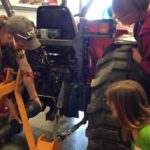
Breaking barriers: Building capacity to provide tractor education
Unskilled farm equipment operation can put farmers at serious physical and financial risk. Lack of knowledge about this equipment can limit farm scale and productivity, and therefore the farm’s ability to provide a sustainable family income. Yet new farmers (including apprentices, interns and employees) increasingly come from non-farm backgrounds and have limited experience with machinery. […]
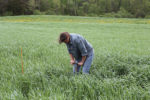
Cornell team digs into cover crops as livestock feed
Cornell University agronomist Quirine Ketterings conducted her Northeast SARE Research and Education project to better understand the incorporation of winter cereal cover crops— triticale, winter rye and wheat—into silage corn rotations. This double crop system enables farmers to provide both corn and cover crops as livestock feed. Because growing cover crops as dairy forages means […]
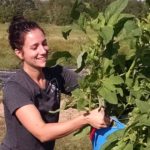
RI student studies production and marketing potential of amaranth
Amaranth is a traditional leaf vegetable in over 50 countries, yet little research exists on growing this crop in temperate climates like the Northeast U.S. University of Rhode Island student Sarah Schweig saw the potential that this crop might hold for farmers looking to diversity their farms in our densely populated, ethnically diverse region. Therefore, […]
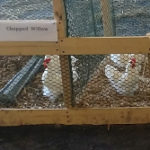
Penn State student studies poultry bedding alternatives
In the Northeast, wood shavings are the predominant bedding material on which commercial broiler chickens are raised. Because their availability and cost fluctuates and new concerns have emerged around biosecurity risks of transporting bedding to and from farms, Pennsylvania State University Master of Science student Amy Barkley used her Northeast SARE Graduate Student grant to […]
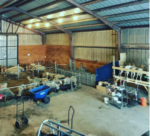
Sustainable year-round sheep milking management
The U.S. sheep dairy industry is currently a seasonal business as traditional dairy sheep breeds tend to follow an annual 180-day lactation. With her Northeast SARE Graduate Student grant, Nikola “Niko” Kochendoerfer of Cornell University, explored the possibility of year-round sheep milking management using meat breed ewes (Finn and Dorset crossbreeds). These breeds are capable […]

UMaine student explores temperature tolerances of kelp
As a sea vegetable, kelp may help Northeast acquaculturists diversify their businesses and contribute to this multibillion-dollar industry. Charlotte Quigley, a PhD student at the University of Maine, used her Northeast SARE Graduate Student grant to study Alaria esculenta, a kelp that is of interest to U.S. growers due to its market potential, nutritious and […]
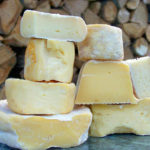
Guild by association: Partnership grant organizes Maryland cheesemakers
Although consumer demand for local Maryland artisanal and farmstead cheeses is high, state regulatory hurdles have created significant barriers for this emerging industry. Working with Ginger Myers, agricultural marketing specialist with the University of Maryland Extension, a committed group of farmstead cheese producers and agriculture support specialists teamed up to form the Maryland Cheesemakers' Guild […]
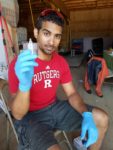
Rutgers student traces genetic trail of BMSB
Knowing that early detection is the most effective strategy to control invasive species, Rutgers University PhD student Rafael Valentin used his Northeast SARE Graduate Student grant to explore a technique using insect DNA to track the brown marmorated stinkbug (BMSB, Halyomorpha halys). Within the past 20 years, BMSB has become a devastating pest across the […]
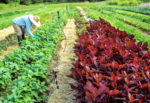
Food hub faces the challenges of scaling up ethnic produce
The New Entry Sustainable Farming Project (NESFP), led by Jennifer Hashley, has a 20-year history of training next generation farmers—including immigrant and refugee growers—to improve local food systems. A recent Northeast SARE Partnership grant supported the Project’s food hub initiative aimed at long-term economic self-reliance among farmers while expanding access of healthy, culturally-appropriate foods in […]
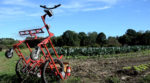
Weed Weasel prototype provides weed cultivation options for small-scale farms
Weed management is crucial on vegetable farms of all scales but may be particularly challenging for small-scale farms as hand weeding is time consuming while tractor cultivation may not fit with smaller acreages. So, with his Northeast SARE Partnership grant, Jan “Lu” Yoder of Woodmetalcanvas in Westport, MA collaborated with local farmers to build, test […]
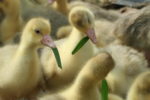
Geese on Pasture
Wesley Bascom of Gozzard City LLC conducted a Northeast SARE Farmer Grant project to look at pastured goose production in northern Vermont. Wesley wanted to track the impact of different levels of grain supplementation for geese on pasture. He divided the goose flock into three groups of approximately 60 each and supplemented one group with […]
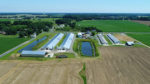
Pollinator buffers improve poultry farm sustainability & neighbor relations
Like many farms across the region, Hill Farms, Inc. in Houston, Delaware has seen in increase in residential development surrounding their farm. Because maintaining positive neighbor relations is important to this poultry operation, owner Tina Hill conducted a Northeast SARE Farmer Grant project to install a mixed vegetative buffer adjacent their poultry houses. Tina was […]
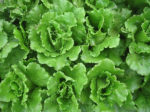
Project expands leafy green production in WV's Eastern panhandle
The Eastern Panhandle region of West Virginia is the fastest growing area in the state and is adjacent to large, diverse populations like Washington, D.C. and Baltimore. To meet the emerging demand for fresh produce from regional wholesale markets like hospitals, school districts and other institutional buyers, Lewis Jett of West Virginia University conducted a […]
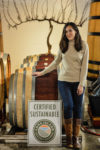
Sustainable wine course goes online
In the vineyard industry, the task of communicating to customers is often left to winery sales and hospitality staff who may not know much about the farming end of the business. Whitney Beaman of Bedell Cellars in Cutchogue, NY recognized that educating winery employees who hold customer-facing roles (including tasting room, wine club and wholesale […]
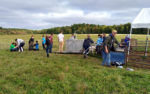
Maine leads project using winter ecology to manage small ruminant parasites
For many small ruminant operations, grazing is central to farm profitability. However, grazing livestock increases risks of losses due to parasite-infested pastures. Haemonchus contortus, Barber pole worm, is a particular threat to sheep and goat farms throughout the Northeast region. Although H. contortus (as a subtropical parasite) has adapted to northern climates, Jim Weber of […]
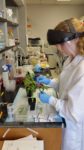
UMD student studies the intersection of food safety and irrigation water
Salmonella enterica is the most common cause of foodborne illness in the United States. Since Salmonella has been a food safety concern for vegetables produced on the Eastern Shore of Maryland with surface water and sediments identified as possible reservoirs for these bacteria, University of Maryland student Angela Ferelli conducted a Northeast SARE Graduate Student […]

Northeast SARE Announces 2020 Grant Awards
The Northeast SARE Administrative Council has approved 59 projects, totaling $4,766,005, for funding thus far in the 2020 grant funding cycle. These include 31 Farmer Grant projects, 12 Research and Education projects, 10 Research for Novel Approaches projects, and 6 Professional Development projects. The Administrative Council is the governance committee of Northeast SARE (comprised of […]
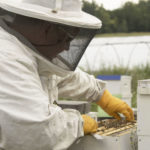
A Look at Pollinator Projects
Pollinators are essential parts of the ecosystem and are crucial to the success of growers everywhere. There has been an increasing decline in pollinator populations, especially native bees, in the last 20 years with four species seeing a 96% decrease and three others going into extinction, according to the Sierra Club. A few key factors […]

Northeast SARE Announces 2019 Partnership Grant Awards
The Northeast Sustainable Agriculture Research and Education (SARE) Program is pleased to announce that its Administrative Council recently approved 29 Partnership Grant proposals for funding, totaling $777,274. Funded by the U.S. Department of Agriculture's National Institute of Food and Agriculture, Northeast SARE offers competitive grants and education in sustainable agriculture. Partnership Grants fund projects conducted […]